Move from AI capability
to growth outcomes.
Growth Outcomes puts the business result first: Diagnose what needs to change, Prescribe the right approach, Build towards the outcome, and Prove the impact against where you started.
Welcome to the Outcome Era.





Your marketing team is busy.
Are they building pipelines?
Download the guide to see what gets in the way of campaign performance, what a connected campaign engine looks like, and how to build one that contributes more clearly to pipeline.
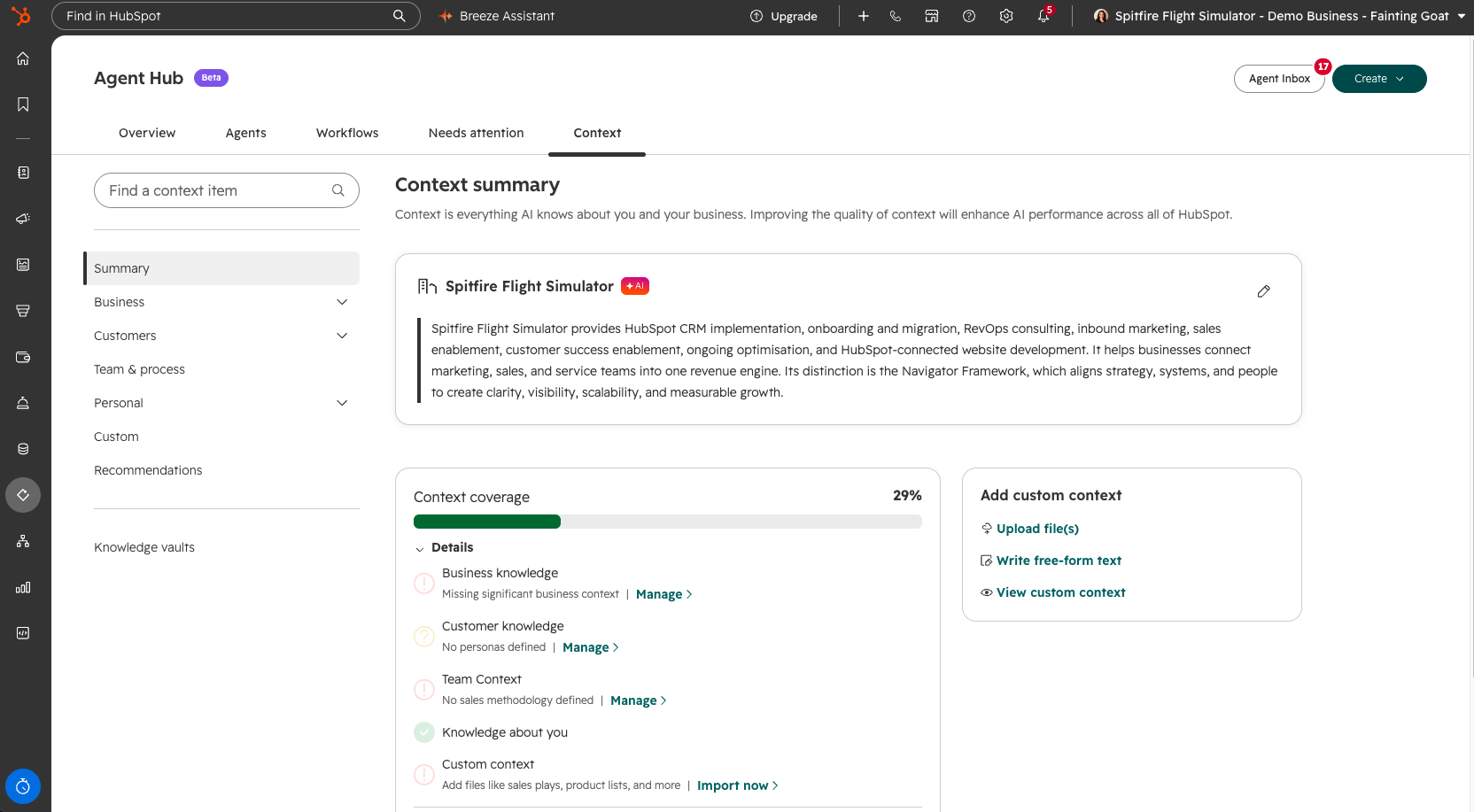
Context Home
Context Home enables you to view and manage what HubSpot knows about your business in one place, so every team and agent works from the same shared context.
Previously, different types of context lived in different places. Context Home gives HubSpot users one page to manage business, customer, team, custom, and knowledge context together.
This lives in Agent Hub under the Context tab, replacing the legacy AI Data Sources experience under AI settings.
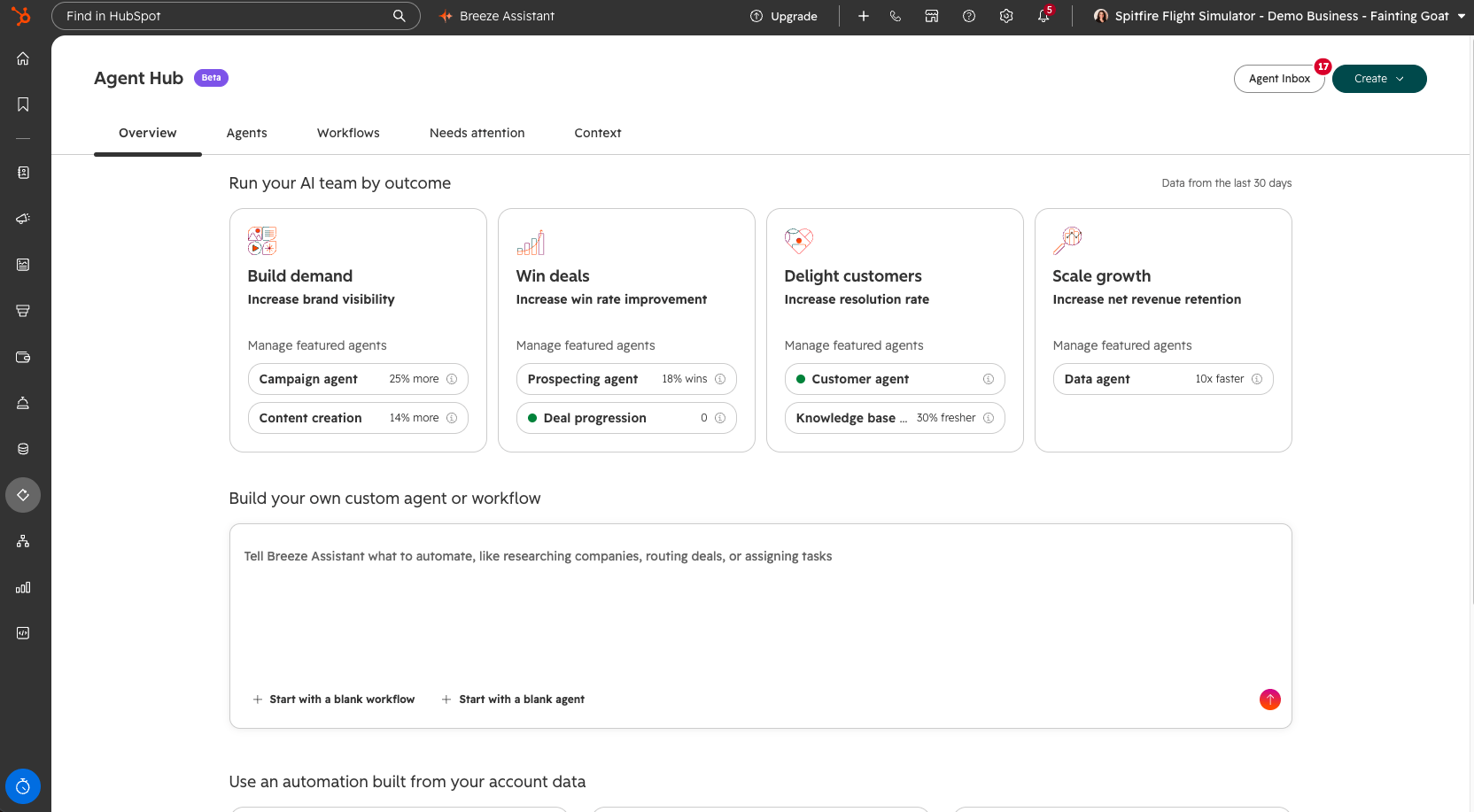
Agent Hub
Agent Hub used to be a launch pad. You'd go there to switch an agent on and then leave. Now it's closer to a cockpit, one place to see every agent running across the account. It’s where teams can view agents and agentic workflows running across the account, activate or manage them, and review the outcomes they generate. In summary, it is a redesigned home to manage all your agents, so you can see what's working, what's possible, and act on it fast.
Our guide to what Agent Hub is and how it works dives into this in detail. At a strategic level, Agent Hub now operates less like a feature page and more like the layer for configuration, visibility, and shared AI context.
Agent Hub is currently available
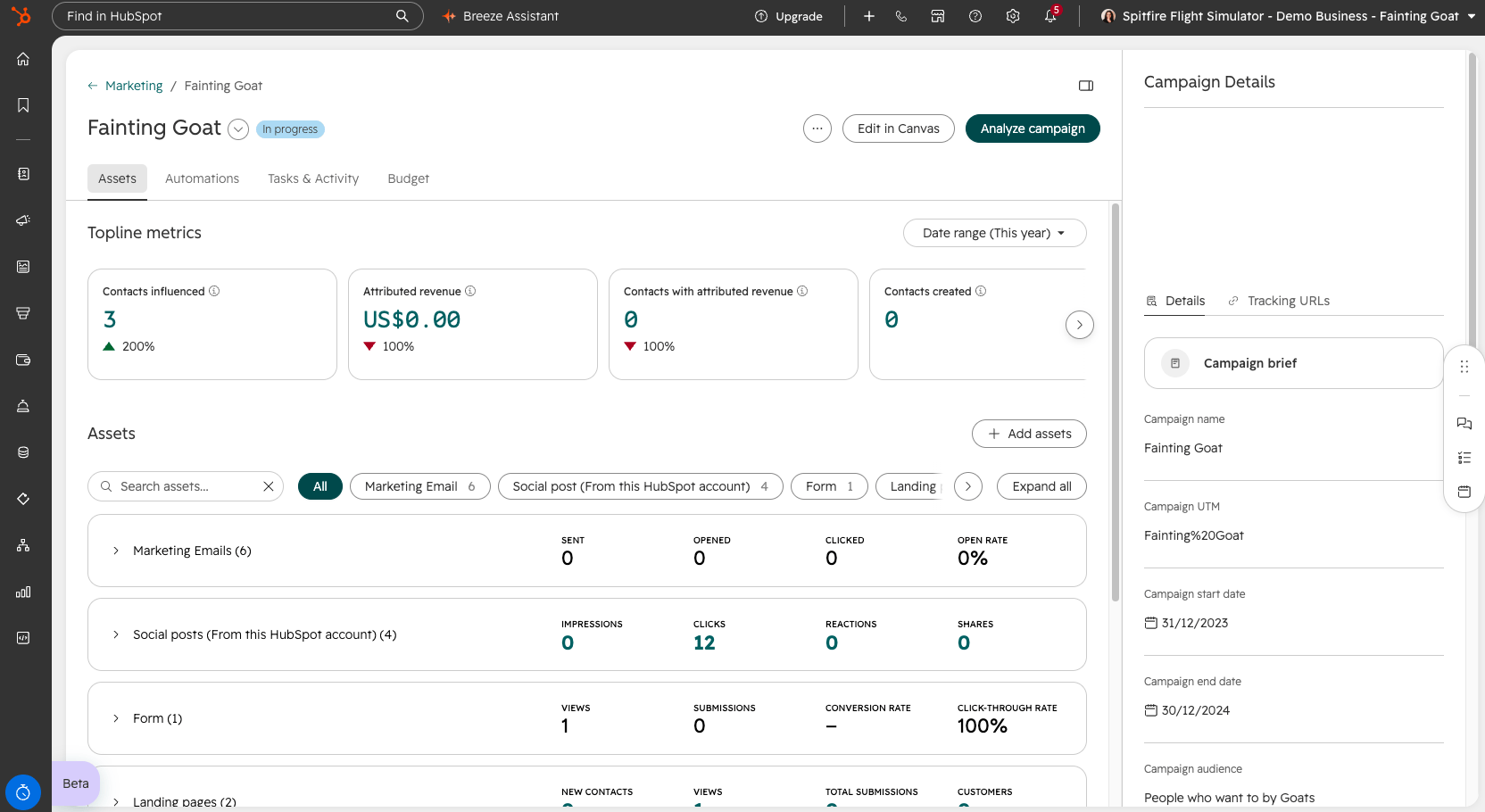
Marketing Studio 2.0
| Before | Now |
| A campaign planning canvas | A connected orchestration layer |
| Confusing UI | Simplified: single home screen, clear navigation |
| Reporting separated from the work | Full campaign journey: funnel conversion, pipeline influenced, ROI |
| Collaboration hidden | Task assignment and team visibility inside the campaign |
| AI content that ignored brand context | Growth Context: brand, ICP, past campaign performance, market benchmarks |
Customer Agent
Customer Agent is becoming more flexible in when, where and how it supports customers, with key updates:
- Hand off conversations: Teams can now assign conversations directly to Customer Agent from the Help Desk or Inbox, allowing it to step in and resolve routine support queries. Read more here.
- Knowledge generation from tickets: Customer Agent can turn resolved ticket history into a knowledge base article. Teams can review and approve this content before the agent starts using it.
- Fallback routing: When human agents are unavailable, conversations can automatically be routed to Customer Agent, helping reduce customer wait times and maintain coverage.
- Email targeting: Businesses now have more control over who Customer Agent engages with via email, using existing HubSpot lists and filters to define eligible contacts.
- Auto-Setup: A new guided setup experience uses existing HubSpot context and previous conversations to help configure Customer Agent faster and with less manual effort.
Together, these updates move Customer Agent beyond a standalone support tool towards a more integrated part of the service team, working alongside human agents and stepping in based on availability, routing rules and customer context.
HubSpot Work
HubSpot work enables users to run onboarding, launches, and more in your CRM with full customer context, so teams and agents spend less time managing work and get better outcomes.
HubSpot Work is currently available in Public Beta
 Portal optimisation & AI readiness audit Agent Hub deployment Marketing Studio strategy blueprint